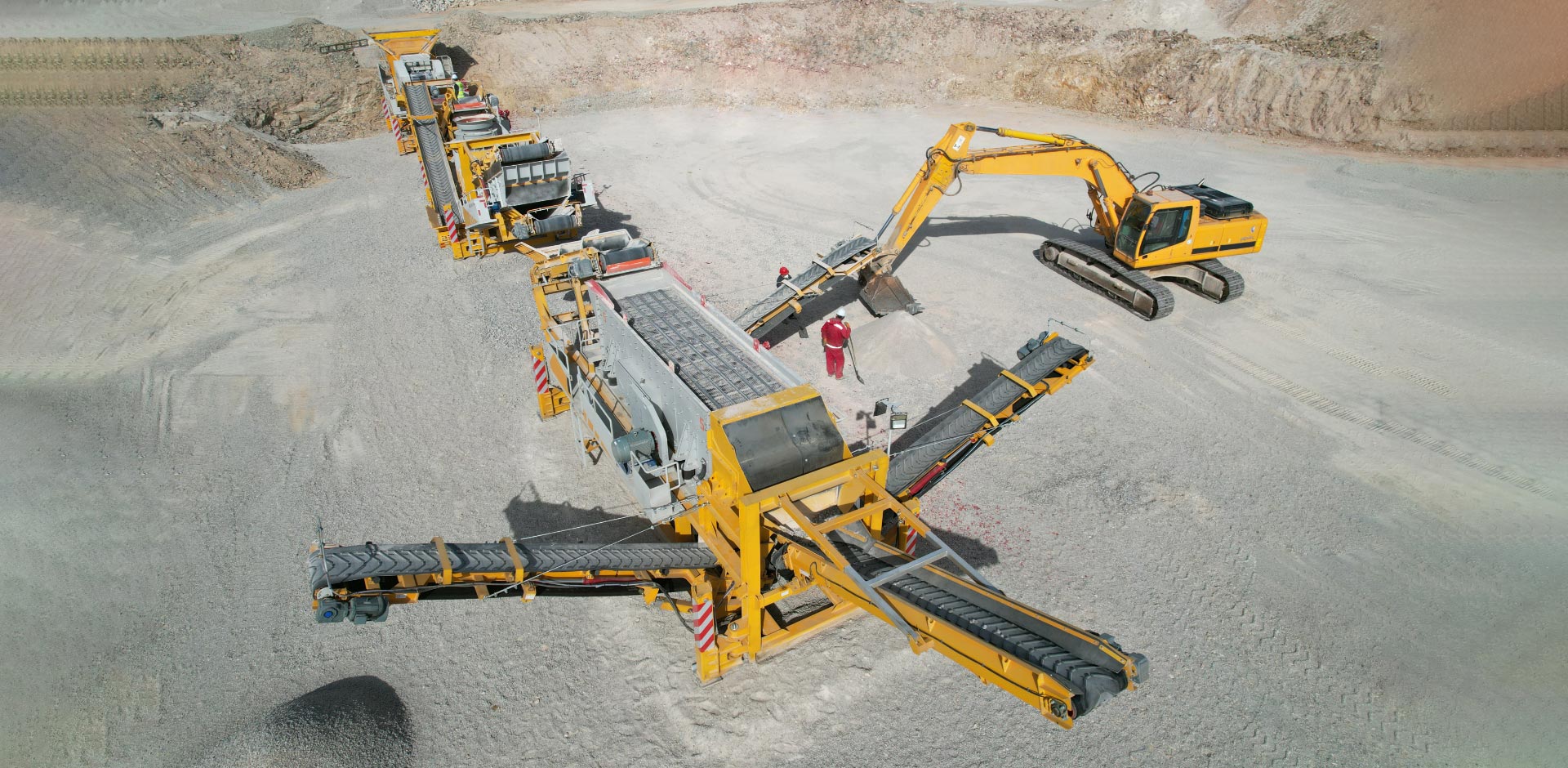
A scientific and feasible crusher plant business plan is the cornerstone of successful investment and operation in the crushing industry, and accurate calculation of crusher plant project cost is the core link in formulating this plan. Whether it is purchasing plant crusher machine, cooperating with crusher suppliers, or predicting long-term operation benefits, all rely on detailed and accurate cost data. For investors who intend to enter the crushing industry, only by clarifying the composition of crusher plant project cost and integrating it into every link of the business plan can they effectively avoid investment risks and improve the probability of project success. This article elaborates on the specific methods of formulating a crusher plant business plan based on cost calculation, covering cost composition analysis, cost calculation steps, business plan framework integration, and risk prevention, to provide comprehensive guidance for investors.
Clarify the Composition of Crusher Plant Project Cost: The Foundation of Accurate Calculation
Before formulating a crusher plant business plan, it is necessary to first clarify the composition of crusher plant project cost, which mainly includes initial investment costs and long-term operation costs. The initial investment cost is the core part of the one-time capital input in the early stage of the project, mainly covering the purchase cost of plant crusher machine, site construction and transformation costs, and supporting facility configuration costs. Among them, the purchase cost of plant crusher machine accounts for a large proportion, which varies according to the type, scale, and quality of the equipment. For example, small mobile crushing production lines have lower equipment costs, while large fixed cone crusher production lines require higher investment. When purchasing, investors need to communicate with multiple crusher suppliers to obtain detailed quotations, and comprehensively consider factors such as equipment performance, after-sales service, and spare parts supply to determine the most cost-effective equipment purchase plan.
Long-term operation costs refer to the continuous expenses required during the operation of the crusher plant, including raw material procurement costs, labor costs, energy consumption costs, equipment maintenance and repair costs, and administrative and management costs. Raw material procurement costs are related to the type of crushed materials (such as limestone, granite, etc.) and local resource prices; labor costs depend on the number of employees and local wage levels; energy consumption costs are closely related to the power of plant crusher machine and operation time; maintenance costs include the replacement of wearing parts (such as crusher liners, hammerheads) and regular maintenance expenses, which require investors to understand the maintenance cycle and spare part prices of equipment through crusher suppliers. Clarifying the composition of these costs can help investors avoid omissions in cost calculation and lay a solid foundation for formulating a scientific business plan.
Master the Step-by-Step Calculation Method of Crusher Plant Project Cost
Accurate calculation of crusher plant project cost requires following a systematic step-by-step method to ensure the rationality and accuracy of data. The first step is to determine the project scale and equipment configuration. Investors need to determine the production capacity of the crusher plant (such as 50t/h, 100t/h, etc.) according to market demand and their own investment capacity, and then select the corresponding plant crusher machine type and supporting equipment (such as conveyors, screening machines, dust removal equipment) on this basis. At this stage, it is necessary to obtain detailed equipment parameters and quotation lists from crusher suppliers, and calculate the total equipment purchase cost by comparing quotations from different suppliers.
The second step is to calculate the initial investment cost. On the basis of equipment purchase cost, add site construction costs (including land lease or purchase fees, factory building construction fees, foundation construction fees for equipment installation), supporting facility costs (such as power supply transformation, water supply system construction, office area construction), and pre-operation preparation costs (such as staff recruitment and training, project approval procedures fees). For example, if the equipment purchase cost is 5 million yuan, the site construction cost is 2 million yuan, and the supporting facility and pre-operation costs are 1 million yuan, the total initial investment cost is 8 million yuan.
The third step is to calculate the long-term operation cost. First, calculate the monthly raw material procurement cost according to the designed production capacity and raw material unit price (for example, if the monthly output is 10,000 tons and the raw material unit price is 50 yuan/ton, the monthly raw material cost is 500,000 yuan). Then, calculate the monthly labor cost based on the number of employees and monthly salary (such as 20 employees with an average monthly salary of 5,000 yuan, the monthly labor cost is 100,000 yuan). Energy consumption cost is calculated according to the total power of the equipment, operation time, and electricity price (for example, the total power is 200kW, the daily operation time is 10 hours, the electricity price is 0.8 yuan/kWh, and the monthly energy consumption cost is 200×10×30×0.8 = 48,000 yuan). In addition, the monthly maintenance cost is estimated according to 5%-10% of the equipment purchase cost (for example, 5 million yuan of equipment, the monthly maintenance cost is about 25,000-50,000 yuan), and the monthly administrative and management cost (such as office supplies, water and electricity fees for office areas) is added to get the total monthly operation cost. Finally, the annual operation cost is calculated by multiplying the monthly operation cost by 12.
Integrate Cost Calculation into the Crusher Plant Business Plan Framework
After completing the crusher plant project cost calculation, it is necessary to organically integrate the cost data into the crusher plant business plan to form a complete and logical plan. The first part of the business plan is the project overview, which briefly introduces the project background, construction scale, production capacity, and core products (crushed stone aggregates of different specifications), and initially puts forward the total initial investment cost and expected annual operation cost to let readers quickly understand the project’s investment scale.
The second part is the market analysis and demand forecast, which combines the local construction industry development status, infrastructure construction planning, and market competition pattern to predict the market demand for crushed stone products and the expected sales price. On this basis, calculate the expected annual sales revenue (annual output × sales price) and combine the annual operation cost to predict the annual profit (annual sales revenue – annual operation cost – depreciation cost of equipment). For example, if the annual sales revenue is 20 million yuan, the annual operation cost is 12 million yuan, and the equipment annual depreciation cost (calculated by 10-year depreciation period) is 500,000 yuan, the annual expected profit is 7.5 million yuan, and the investment recovery period is about 1.1 years (initial investment cost ÷ annual profit), which provides a basis for judging the project’s investment value.
The third part is the project implementation plan, which arranges the project construction schedule (such as equipment purchase and installation period, site construction period, pre-operation preparation period) based on the initial investment cost composition and payment progress, and clarifies the time node and capital input plan of each stage. For example, 60% of the equipment purchase cost is paid when signing the contract with the crusher suppliers, 30% is paid after equipment installation and commissioning, and 10% is paid after the guarantee period expires. The fourth part is the operation and management plan, which formulates the operation management system, staff responsibility system, and equipment maintenance system based on the operation cost composition, and puts forward measures to control the operation cost (such as optimizing the raw material procurement channel to reduce raw material cost, improving the equipment operation efficiency to reduce energy consumption cost).
The fifth part is the financial analysis, which uses the cost calculation data to conduct a comprehensive financial evaluation of the project, including net present value, internal rate of return, investment recovery period, etc. At the same time, it formulates the fund raising plan (such as self-owned funds, bank loans, joint venture investment) according to the initial investment cost, and analyzes the repayment capacity and financial risk of the project. The sixth part is the risk assessment and prevention measures, which combines the cost calculation results to identify potential risks (such as raw material price fluctuations leading to increased operation costs, equipment failure leading to production suspension and loss) and puts forward corresponding prevention measures (such as signing long-term supply contracts with raw material suppliers, cooperating with crusher suppliers to establish a rapid maintenance mechanism).
Key Notes for Formulating the Plan: Ensure the Feasibility and Risk Control of the Project
When formulating a crusher plant business plan based on crusher plant project cost calculation, there are several key notes to pay attention to. First, the cost calculation should be realistic and accurate. Investors should conduct on-site investigations to understand the local land prices, raw material prices, labor costs, and electricity prices, and obtain detailed and real quotation data from crusher suppliers instead of relying on estimated data. For uncertain costs (such as raw material price fluctuations, policy adjustment fees), a certain floating space should be reserved to avoid the impact of cost overruns on the project.
Second, it is necessary to select plant crusher machine and cooperate with crusher suppliers rationally. When purchasing equipment, it is not advisable to pursue low prices blindly, but to comprehensively consider the equipment’s performance, energy consumption, and after-sales service. Choosing a crusher supplier with strong technical strength and a sound after-sales service network can reduce the later maintenance cost and equipment failure rate. At the same time, it is recommended to sign a detailed cooperation contract with the supplier, clarifying the equipment quality standards, delivery time, after-sales service scope, and spare part supply guarantees.
Third, the business plan should be flexible and adjustable. The market environment and policy conditions are constantly changing, and the cost data and profit forecasts in the business plan may also need to be adjusted accordingly. Investors should regularly review and update the business plan according to the actual operation of the project and changes in the external environment, and adjust the operation strategy in time to ensure the continuous feasibility of the project. In addition, it is necessary to pay attention to policy risks (such as environmental protection policy adjustments that may require additional investment in environmental protection equipment) and market risks (such as changes in market demand leading to unsold products), and incorporate corresponding risk response measures into the business plan.
In conclusion, formulating a crusher plant business plan by calculating crusher plant project cost is a systematic work that requires clarifying the cost composition, mastering scientific calculation methods, and integrating cost data into the overall plan framework. By accurately calculating the initial investment cost and long-term operation cost, and cooperating with reliable crusher suppliers to select appropriate plant crusher machine, investors can formulate a feasible business plan that meets the actual situation. At the same time, paying attention to risk prevention and plan adjustment can effectively improve the success rate of the crusher plant project and realize stable and sustainable operation and profit.