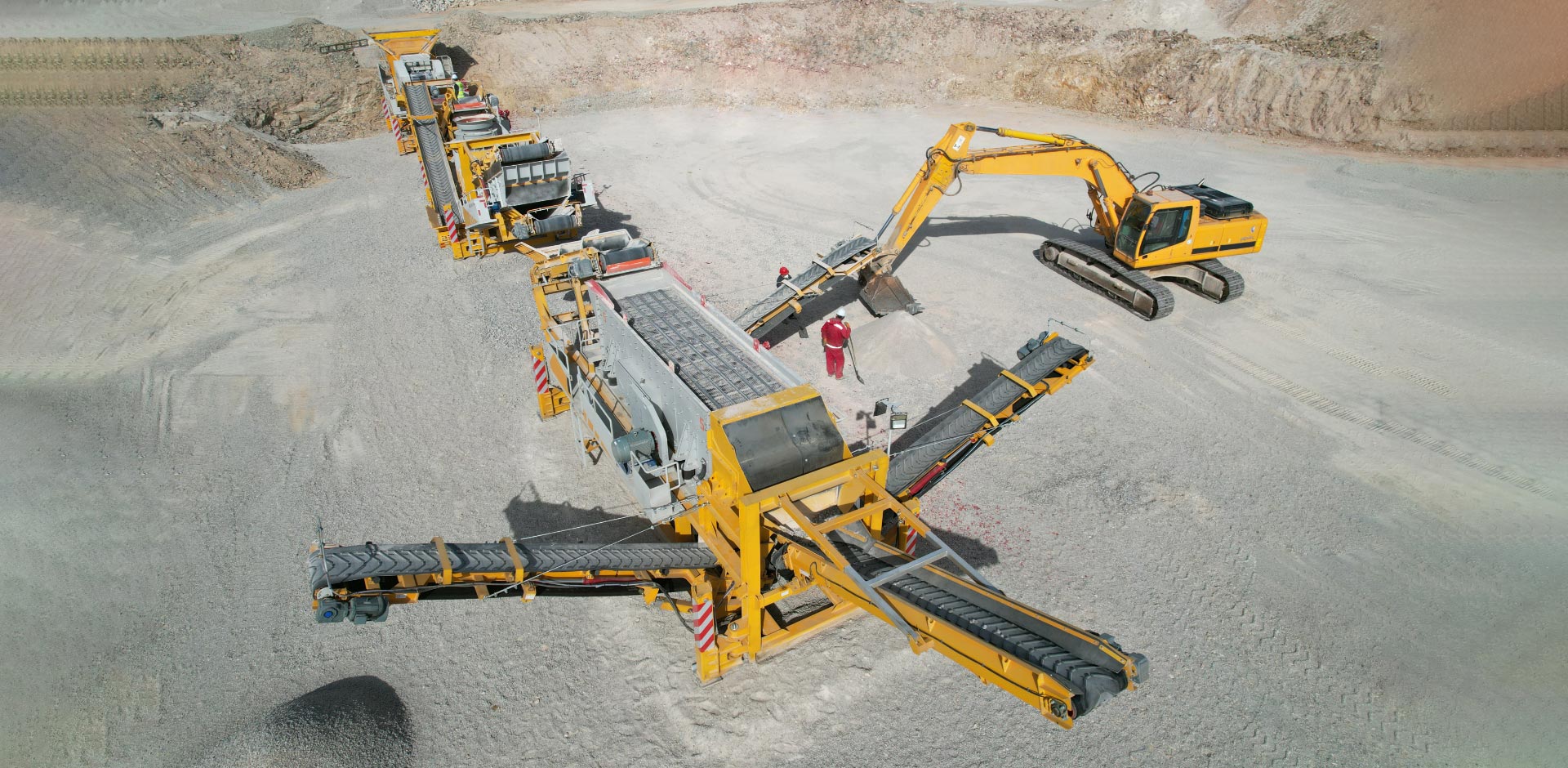
In the rugged landscape of Peru, where the Andes dominate and infrastructure projects sprawl across remote valleys, construction contractors face a unique set of challenges. Unlike their counterparts in flatter, more industrialized nations, Peruvian builders must constantly adapt to unpredictable terrain, widely dispersed job sites, and tight project timelines. This has driven a clear preference for mobile crushing solutions over stationary plants. This article explores the practical, economic, and logistical reasons behind this trend, while also comparing the Peruvian approach to neighboring Chile, where stationary plants still hold sway.
The Peruvian construction reality: Why mobility matters
Peru’s construction sector is defined by three characteristics: mountainous geography, fragmented project locations, and a high volume of road and tunnel works. These factors make a stationary stone crusher plant Peru(plantas chancadoras de piedra Perú) impractical for most contractors.
Geographical fragmentation
Unlike Chile’s concentrated mining districts, Peruvian construction projects are scattered from coastal Lima to high‑Andean Cusco and the Amazon fringe. Hauling aggregate across these distances is prohibitively expensive. Contractors therefore need a stone crusher plant that moves with the project.
Short to medium project lifespans
Most Peruvian road, bridge, and housing developments last 6 to 24 months. Installing a stationary plant with foundations, conveyors, and silos would consume a third of that timeline and leave behind stranded assets. Mobile plants, by contrast, arrive on a lowboy trailer and are crushing within a day.
Permitting and environmental flexibility
Peru’s environmental regulations require detailed site rehabilitation plans. Mobile crushers leave minimal footprint and can be removed entirely once a project ends, simplifying closure obligations. This agility is highly valued by contractors bidding on government infrastructure tenders.
Cost analysis: Stone crusher price and total ownership
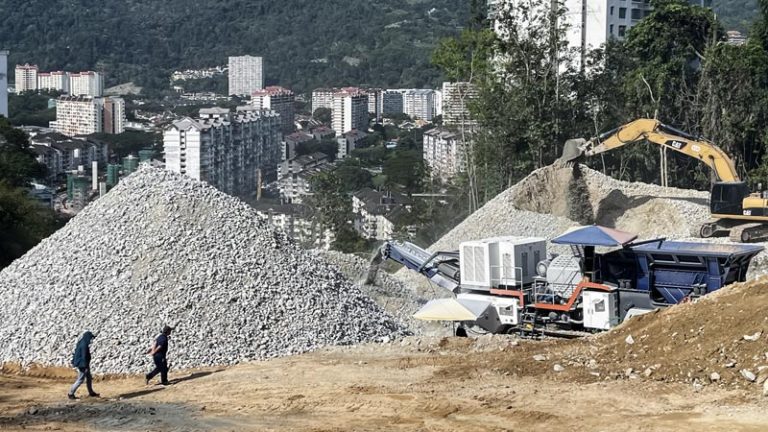
The initial stone crusher price for a mobile unit is typically 20–30% higher than an equivalent stationary plant. However, Peruvian contractors focus on total cost of ownership per tonne of delivered aggregate, not just purchase price.
Logistics savings outweigh higher upfront cost
A stationary stone crusher forces contractors to haul raw material to the plant or truck finished aggregate to multiple sites. In Peru’s narrow mountain roads, trucking costs can exceed $0.30 per tonne‑kilometer. A mobile plant positioned directly at the worksite eliminates most of these hauls, often reducing delivered aggregate cost by 40–50%.
No foundation or civil works
Stationary plants require concrete foundations, crane access, and sometimes blast‑proof enclosures. These add $150,000–$400,000 to a project. Mobile units run on retractable legs or simple compacted pads. For a contractor managing thin margins, avoiding civil works is a decisive advantage.
Resale value and asset utilization
A mobile stone crusher plant can be used on three or four projects per year, earning revenue almost continuously. Stationary plants, once bolted down, are rarely moved. Peruvian contractors therefore view mobile crushers as fleet assets, not site‑specific investments.
A cross‑border comparison: Why Chile is different
To understand Peru’s preference, it helps to look at the neighbor. In Chile, the dominant demand comes from large open‑pit mines, not construction contractors. An aggregate crusher plant Chile(planta chancadora de áridos Chile) mining companies use is almost always stationary, processing 5,000+ tonnes per hour for decades.
Different customer, different needs
Chilean aggregate production is tied to permanent copper operations. These require maximum throughput, lowest cost per tonne, and integration with overland conveyors. Mobility would add complexity without benefit. In contrast, Peru’s construction contractors value flexibility over peak efficiency.
Market size and rental ecosystem
Peru has developed a robust rental market for mobile crushers, with several regional suppliers offering units by the month. This lowers the entry barrier for small and mid‑sized contractors. Chile’s rental market, dominated by mining services, focuses on stationary plant components rather than complete mobile units.
Technical advantages of mobile plants for construction
Beyond economics, mobile plants offer technical features that align well with construction workflows.
Rapid reconfiguration
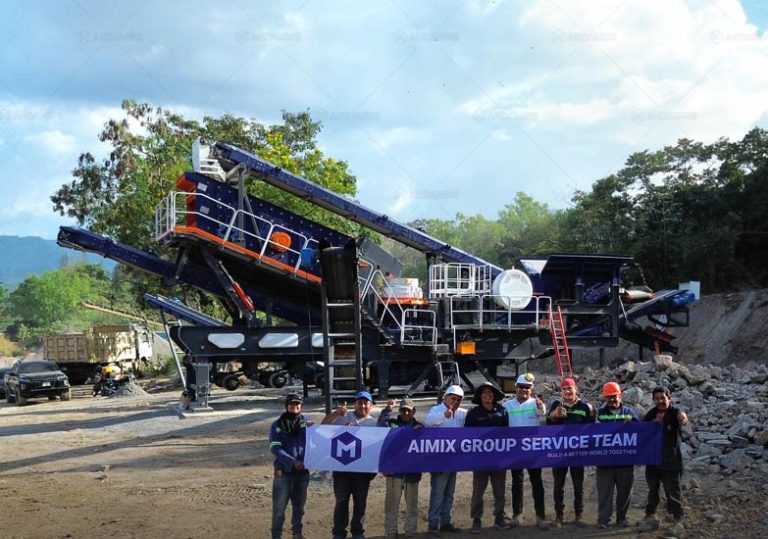
Many mobile crushers are built as closed‑circuit units that crush and screen in one chassis. Contractors can produce three aggregate fractions simultaneously—base course, sub‑base, and concrete sand—without additional equipment. Some models integrate a magnetic separator for rebar removal when crushing demolition waste.
Self‑powered or grid‑flexible
Remote Peruvian sites often lack grid power. Mobile plants come with diesel or auxiliary electric drives. Contractors can run them off generator sets or, where available, plug into temporary grid connections. Hybrid models now allow switching between power sources to optimize fuel costs.
GPS and telemetry for fleet management
Modern mobile crushers include GPS tracking, production monitoring, and predictive maintenance alerts. A contractor managing multiple sites can see real‑time tonnage, fuel burn, and liner wear from a central office. This data helps optimize which stone crusher plant(planta de trituración de piedra) goes to which project next.
Project examples where mobile crushers excel
Peruvian contractors routinely choose mobile plants for specific project types.
Highway expansion in the Andes
A 45‑km highway widening project required 180,000 tonnes of graded aggregate. The contractor placed a mobile jaw crusher at the midpoint and a mobile cone unit at the northern section, crushing local river rock. Trucks never traveled more than 8 km. The project finished three months ahead of schedule.
Urban redevelopment in Arequipa
Demolishing an old market produced 35,000 tonnes of concrete rubble. A mobile impact crusher with a screener processed the material on‑site, producing recycled aggregate for new sidewalks and drainage layers. Landfill costs were eliminated, and the stone crusher price(la trituradora de piedra precio) was recovered in disposal savings alone within six weeks.
Remote bridge construction in the Amazon foothills
No local quarries existed within 120 km. The contractor brought in a mobile plant with an integrated feeder, crushed hard river cobble at the bridge abutment, and produced all required concrete aggregate and fill material. Without a mobile solution, the project would have been unbid due to logistics costs.
The future: More mobility, not less
Peru’s infrastructure pipeline includes the Longitudinal de la Sierra road, port expansions, and multiple mining access routes. All require aggregate in places where no fixed plant exists. Meanwhile, stone crusher price premiums for mobile units are shrinking as local manufacturing and assembly grow in Lima and Arequipa.
Manufacturers are also introducing track‑mounted units with higher throughput (350–500 tph), narrowing the gap with stationary plants. Teleoperation and autonomous movement are beginning to appear, allowing a single operator to relocate a crusher across a site without a truck. For Peruvian contractors, the case for mobile crushing has never been stronger. While Chile continues to build its massive stationary aggregate crusher plant Chile mining depends on, Peru’s construction sector will keep rolling—literally—with mobile plants that turn rock into revenue, one project at a time.