In the crushing and screening industry, the distinction between a professional manufacturer and a standard supplier is often the fulcrum upon which the success of a multi-million dollar operation pivots. At a cursory glance, many providers appear to offer comparable machinery, yet the divergence in quality, support, and long-term value is profound. The marketplace is saturated with vendors who can deliver a machine, but only a select few possess the engineering acumen, metallurgical expertise, and comprehensive service infrastructure to truly be considered professional partners. This article aims to dissect the critical differentiators that separate the wheat from the chaff, guiding project managers and quarry owners toward a procurement decision that ensures operational longevity and financial prudence.
Engineering Pedigree and Design Philosophy
The foundational difference lies not in the assembly, but in the underlying engineering philosophy. A standard supplier typically procures components and assembles them, often relying on generic designs. Conversely, a professional crusher machine manufacturer treats the crusher as an integrated system, where every component is meticulously engineered to operate in concert, maximizing efficiency and durability.
Metallurgical Superiority and Component Integrity
The primary point of divergence is the quality of materials used in critical wear parts. A professional manufacturer invests heavily in metallurgical research to develop alloys with superior hardness, toughness, and resistance to abrasion and impact. They understand that a crusher is only as durable as its weakest component, be it the jaw plates, the blow bars, or the concave liners. The use of proprietary, high-manganese steel or specially formulated chrome-iron alloys is a hallmark of a professional operation. A standard supplier, on the other hand, will often source the cheapest available components to maximize margins. The consequence is a machine that may appear robust initially but suffers from premature wear, leading to frequent downtime and exorbitant replacement costs that will overshadow any initial savings.
Holistic System Integration and Innovation
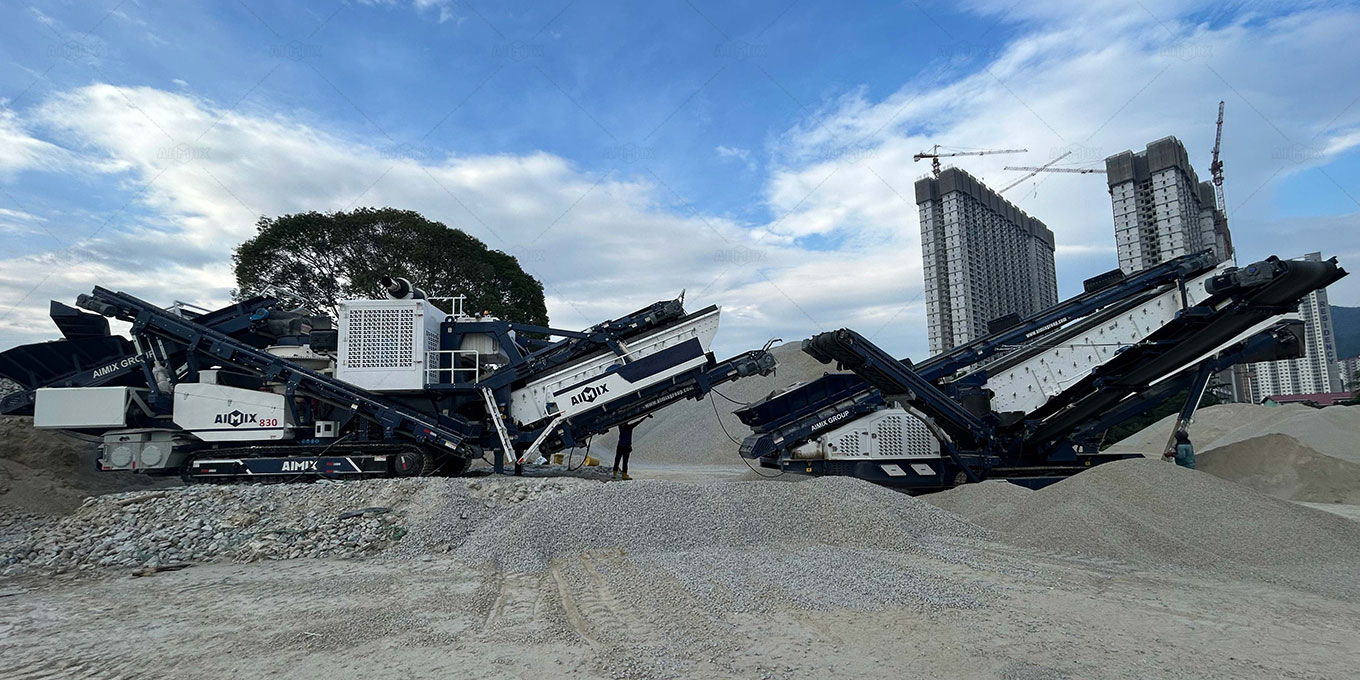
Beyond the metallurgy, a professional manufacturer pursues holistic system integration. This involves the seamless meshing of the feeder, crusher, and conveyor systems to ensure a consistent material flow. They employ advanced finite element analysis (FEA) and computational fluid dynamics (CFD) during the design phase to stress-test the chassis and optimize the crushing chamber geometry. This results in a track crusher machine that is not only stronger but also more energy-efficient, reducing the cost per tonne of crushed material. They are also at the forefront of innovation, incorporating automated controls and intelligent monitoring systems that allow for real-time adjustments and predictive maintenance. This is a stark contrast to the standard supplier, who typically offers a static, unoptimized design that fails to adapt to the challenging and varied material characteristics encountered in the field.
Quality Assurance and Production Transparency
Trust in a manufacturer is built upon a foundation of verifiable quality. A standard supplier often operates with a degree of opacity, leaving the buyer to rely on faith. A professional manufacturer, however, embraces transparency and employs rigorous quality assurance protocols that ensure every machine leaving the factory meets stringent performance benchmarks.
Rigorous Testing and Quality Control Protocols
Professional manufacturing facilities are equipped with state-of-the-art testing apparatus. Every critical component, from the main frame to the eccentric shaft, is subjected to non-destructive testing (NDT) such as ultrasonic and magnetic particle inspections to detect potential flaws. The assembly undergoes rigorous run-in tests with simulated load conditions to verify hydraulic pressures, lubrication systems, and overall electrical integrity. This exhaustive process is a non-negotiable standard. For a standard supplier, such meticulous testing is often considered an unnecessary expense. Their quality control may be superficial, consisting of little more than a visual inspection, meaning a latent manufacturing defect is only discovered when the machine fails catastrophically on a live job site.
Traceability and Long-Term Documentation
One of the most overlooked attributes of a professional manufacturer is their commitment to traceability. Every batch of steel used in the construction of the machine is documented, and the heat numbers are recorded. This allows for total material traceability, which is invaluable when diagnosing a failure or verifying the integrity of the machine years down the line. They provide comprehensive documentation, including detailed hydraulic and electrical schematics, which empowers on-site maintenance teams to troubleshoot effectively. A standard supplier often treats such documentation as a mere formality, providing generic manuals that are of little use in a technical crisis. This lack of documentation creates a dependency on the supplier for even simple repairs, which can be a significant operational bottleneck.
After-Sales Support and Lifecycle Partnership
Arguably, the most defining characteristic of a professional manufacturer is the transition from being a mere equipment provider to a lifecycle partner. The relationship does not end at the point of sale; it is the beginning of a long-term collaboration focused on maximizing the operational lifespan and productivity of the machine for crushing stone.
Strategic Spare Parts Availability and Logistics
A professional manufacturer understands that downtime is the arch-enemy of profitability. Consequently, they invest in sophisticated global logistics networks to ensure that critical spare parts are strategically warehoused and readily available. They offer a guaranteed response time for parts dispatch, which is a vital component of the sales contract. They also use the data collected from their connected machines to anticipate wear patterns, proactively suggesting preventative maintenance. A standard supplier views spare parts as a separate profit centre, often holding minimal stock and relying on long shipping times. When a part fails on a standard supplier’s machine, the operator often faces weeks of inactivity waiting for a replacement, a period that can be financially ruinous.
Technical Expertise and On-Site Mentorship
Finally, a professional manufacturer provides a cadre of highly skilled application engineers who possess not only theoretical knowledge but also practical, on-the-ground experience. They can help optimize the crusher settings for specific material types, provide expert training to the operator crew, and assist in troubleshooting complex issues. This mentorship ensures the mobile crusher machine is operated within its optimal parameters, preventing misuse that can lead to costly repairs. A standard supplier generally lacks this depth of expertise. Their after-sales service is often outsourced and reactive, arriving only when an issue has already degenerated into a crisis. They offer little to no guidance on best practices, leaving the operator to navigate the complexities of the machinery alone, which inevitably leads to inefficiency and a shortened machine lifespan.